Dual Headquarters Driving Growth: Planto Technology’s Shanghai–Wuxi Collaboration Cultivates a New High-Precision Force-Control Sensor Ecosystem
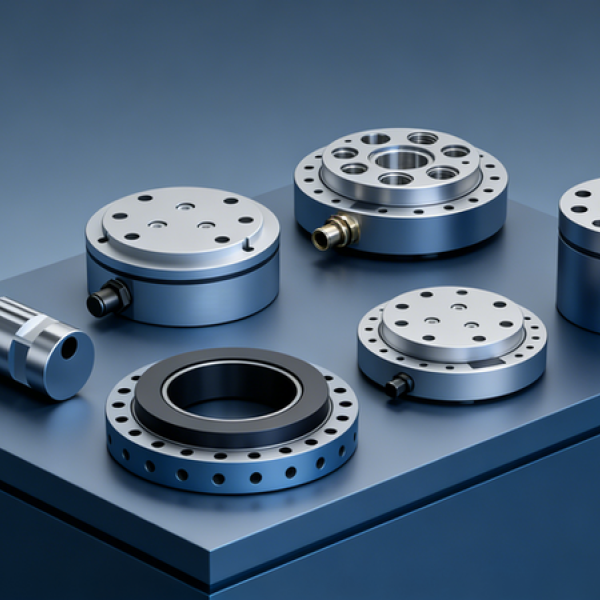
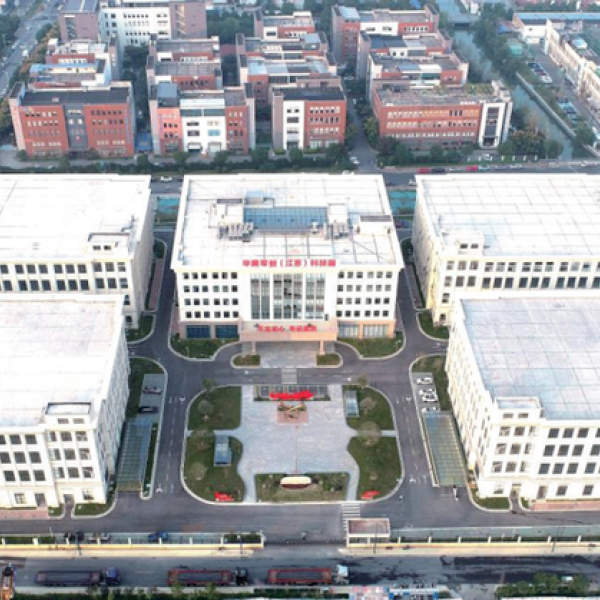
As a key hub connecting the Yangtze River Delta and supporting regional integration, Shanghai actively promotes the deep integration of technological and industrial innovation, synergizing with neighboring cities to unleash strong growth momentum. Planto (Shanghai) Technology Co., Ltd., a subsidiary of Planto Sensing Technology Holdings, exemplifies this wave. Operating dual headquarters in Shanghai and Wuxi, the company focuses on high-precision force-control sensor solutions, demonstrating strong competitiveness with core products such as six-axis force/torque sensors, joint torque sensors, and tactile sensors in the robotics sector.

Collaborative Innovation in the Yangtze River Delta
Planto Technology’s dual-headquarters strategy aligns with the region’s integrated development. Shanghai, as a global metropolis, provides abundant talent, information resources, and international platforms. Wuxi, a major manufacturing hub in the Yangtze River Delta with a strong sensor industry foundation, offers fertile ground for technology commercialization and industrialization.
Core Technological Breakthroughs
High-precision force-control technology is critical for industrial robot precision assembly and flexible manufacturing, directly impacting production efficiency and product yield. Traditional resistive or capacitive sensors struggle with temperature drift and delayed dynamic response, limiting performance under complex conditions. Planto’s core technical team has tackled these challenges through continuous R&D and innovation.
World-Class Team and Industry-Academia-Research Integration
Planto Technology’s competitive edge stems from its top-tier R&D team. Founder Bo Weizhong has over 30 years in automotive sensors, participated in the national 863 Program, and holds multiple core intellectual property rights. R&D Director Yao Yu, Ph.D. from Nanjing University of Aeronautics and Astronautics, specializes in multi-dimensional sensor structures, circuits, and algorithm decoupling, successfully developing sensors for aerospace, maritime force measurement, wind tunnel testing, automotive crash experiments, and parachute drag balance tests. Chief Scientist Lin Rongzhou, a professor at South China University of Technology with postdoctoral research at the National University of Singapore and a Ph.D. from Nanyang Technological University, leads interdisciplinary research in electronic skin and wearable sensing. This deep industry-academia-research integration provides Planto with unique advantages across the full chain from theoretical innovation to industrial application.
Full-Chain Capability and Flexible Digital Manufacturing
Planto Technology offers a complete end-to-end solution from customized R&D to mass production and sales, using digital flexible manufacturing to meet diverse market demands. In robotics, the company has provided samples to over 50 domestic humanoid, collaborative, and industrial robot enterprises, covering six-axis force/torque sensors and joint torque sensors, with nearly 1,000 six-axis sensors shipped. Some customers have moved from sample validation to small-batch production.
Expanding the Robotics Market
Focusing on humanoid robots, Planto has strategically invested in Kepler Robotics (humanoid robot platforms), Tasun Tech and Yuansheng Xianda (tactile sensors), and Wuxi Beiwei Sensing (IMU). These investments enable end-to-end coverage from robot platforms to critical mechanical sensing components, building a multimodal sensing ecosystem centered on six-axis force/torque sensors integrated with tactile and IMU sensing.
In production, new automated testing and machining equipment deployed in April 2025 enables fully automated calibration and inspection, improving precision, consistency, and production efficiency, laying the foundation for large-scale delivery.
Future Outlook: Intelligent Sensing and Industrial Integration
With 5G and Industrial Internet development, composite sensors are evolving toward “perception-decision-action” integration. Advanced sensor nodes integrating edge computing chips and digital twin models can perform real-time force compensation and anomaly detection locally. In medical robotic surgery, this achieves tissue cutting force control precision of 0.01 N, increasing surgical success rates by 30%.
From resistive-capacitive hybrid structures to temperature self-compensation algorithms, high-precision force control is redefining the perception boundaries of intelligent manufacturing. With sensors reaching 0.001 N accuracy and ±0.01°C temperature stability, industrial robots can achieve human-finger dexterity, supporting flexible and unmanned production. Planto is actively developing MEMS-based six-axis force/torque sensors, targeting miniaturization, high-frequency response, and embedded force-control algorithm integration.
Additionally, Planto collaborates with ecosystem partners to develop multimodal sensors, exploring tactile + force and IMU + force integration, further enhancing system-level capabilities and added value.
Recommend
-

-

QQ Zone
-

Sina Weibo
-

Renren.com
-

Douban