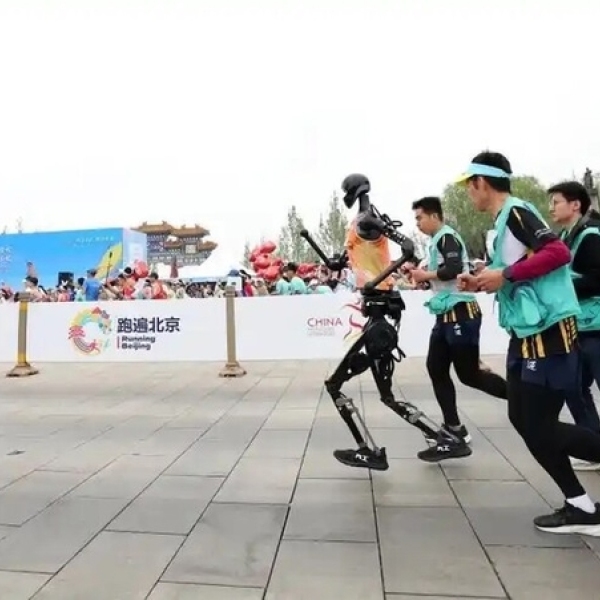
AI Powers Six-Axis Force Sensors: Humanoid Robots Step into the Era of Precision Perception
From gently gripping an egg without breaking it, to precisely assembling screws, and even adjusting the force of cup delivery based on an elderly person’s grip, a series of humanized operations is now becoming reality through the deep integration of six-axis force sensors and AI technology. According to the latest report from GGII Robotics Research Institute, the domestic humanoid robot six-axis force sensor market in China surpassed CNY 300 million in 2025. With the adoption of edge-side AI technologies, this market is expected to grow at a compound annual growth rate of 60%, reaching CNY 14.3 billion by 2030, becoming a core driver for smart manufacturing and service economy upgrades.
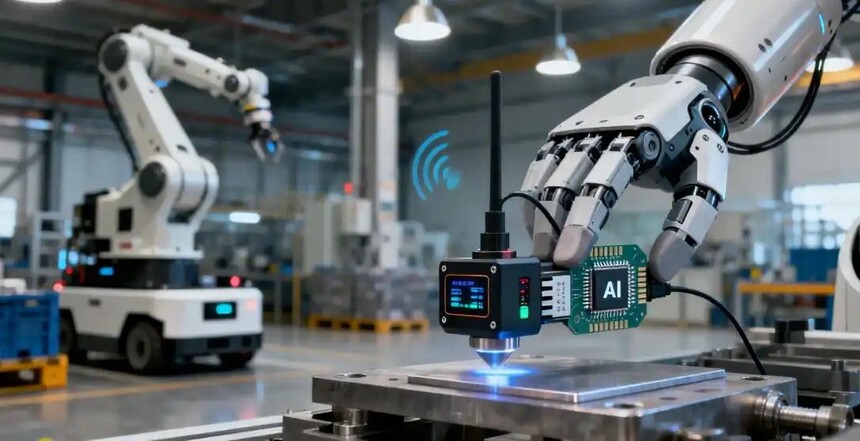
At a recent humanoid robot core components exhibition, industry-leading companies showcased next-generation intelligent six-axis force sensors. These sensors integrate proprietary AI decoupling algorithms, enhancing overall measurement accuracy to 0.1% FS, and maintaining zero-point drift control of 0.02%/℃ across a temperature range of -10°C to 60°C. “Traditional sensors are merely data collectors, while AI gives sensors the ability to think,” explained the company’s CTO. These sensors have been installed in humanoid robot prototypes from Xiaomi, Zhiyuan, and others, in wrist and ankle joints, enabling 0.1 mm-level precision operations and dynamic gait adjustment, giving robots autonomous obstacle avoidance and force-control compensation in complex environments.
The fusion of AI and six-axis force sensors is reshaping the application boundaries of humanoid robots. A Wuxi-based company has developed edge-side AI six-axis force sensors that, through algorithm-chip co-optimization, reduce force-control response times to under 10 milliseconds—50 times faster than a human blink. In automotive welding workshops, the sensor can detect deviations as small as 0.4 N and make real-time adjustments, reducing defective weld rates from 5.2% to 0.3%, saving over CNY 8 million annually. In elderly care, it can remember individual grip habits and control force delivery within 0.05 N, reducing complaints about robotic caregivers by 60%.
The accelerating trend of domestic localization is fueling market growth. China’s domestic share of six-axis force sensors rose from 19% in 2020 to 57.8% in 2024, with three domestic companies now among the top five in industry shipments. Their cost advantages are key drivers for domestic substitution: one company reduced sensor prices to 50% of imported products through scale manufacturing and technology synergy, while another shortened customization cycles to 45 days, only one-third of international counterparts. “Previously, a single humanoid robot’s force sensors cost over CNY 40,000; now domestic solutions can be kept under CNY 10,000,” noted a CICC analyst. Cost reduction is also driving an increase in sensor deployment per robot from 4 to 6 units, creating demand for over 2.4 million sensors from 600,000 humanoid robots by 2030.
Policy and capital support are further expanding industry potential. The Ministry of Industry and Information Technology (MIIT) identified high-precision force sensors as a core component in its Guidelines for Humanoid Robot Innovation Development, while local governments are offering subsidies: Jiangsu provides up to CNY 20 million in R&D grants, and Shandong includes sensor enterprises in special bond-supported smart manufacturing projects. Since 2025, over CNY 1.5 billion has been invested in the six-axis force sensor sector, with key funds allocated to AI algorithm optimization and production line expansion.
“The six-axis force sensor is the ‘digital tactile nerve’ of a humanoid robot, and AI is the brain that teaches this nerve to think,” stated the director of GGII Robotics Research Institute. With ongoing technological iteration, sensors are expected to evolve from perception-decision to prediction-optimization. In industrial scenarios, they can anticipate equipment wear risks; in medical applications, assist with minimally invasive surgery force control; and in home services, allow robots to better understand user habits. This precision perception revolution is propelling humanoid robots from laboratories into commercial deployment, creating a new growth pole for China in the global intelligent equipment industry.
Recommend
-

-

QQ Zone
-

Sina Weibo
-

Renren.com
-

Douban